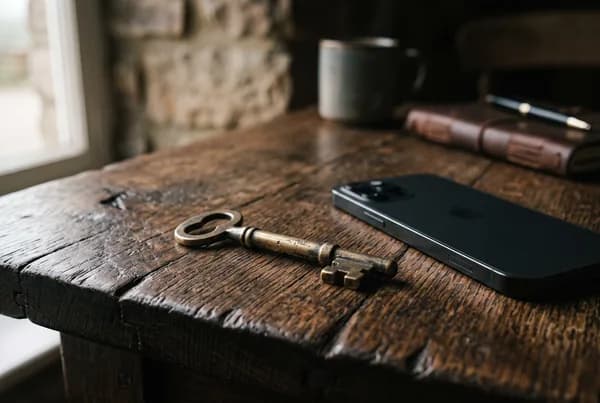
Yes, probably. If you shared a life with someone, assume they still have a way into your accounts until you have checked and closed each one. That is not paranoia. It is just where you start.
I am not saying your ex is sitting there reading your email. Most of the time nobody is. But "probably not doing it" and "can't do it" are different things, and only one of them is your job to fix.
Start with the account that unlocks the rest
Your email is the master key. If someone can get into your main email, they can reset the password on almost everything else. So that is where you begin.
Change the password. Make it long and not one you have used before. Then turn on two-factor authentication so a code goes to your phone when anyone logs in. Then look at the recovery options. Old phone numbers, a shared backup email, a partner's number listed as a recovery contact. Take them off.
Do the same for your phone account, your Apple or Google account, and your password manager if you use one. Those four are the spine of everything else. Apple's Personal Safety User Guide walks through the Apple side of this step by step.
Look at where you are already logged in
Most big services have a page that lists every device currently signed in. Email, social media, Netflix, your bank app. You log in, you find "active sessions" or "your devices," and you sign out everything you do not recognise. Google's is under devices with account access.
This is faster than people expect and it tells you a lot. An old laptop you got rid of. A tablet that stayed at the house. A login from a town you have not been to. You do not have to guess. The list is right there.
The accounts people forget
Email and banking get the attention. These are the ones that slip through:
- Shared streaming and shopping accounts with a saved card
- Cloud photo storage where you are both still signed in
- A family phone plan where one of you can see the other's data
- Loyalty and rewards accounts tied to your number
- The smart home gear, doorbell cameras, location sharing
Go through them one at a time. Saved cards in particular. You do not want a subscription you forgot about charging a card you forgot was shared.
Turn off location sharing on your terms
Find My, Google location sharing, Life360, the works. Decide who can see where you are and turn off the rest - on an iPhone that lives under Control the location information you share. If you have kids and there is a shared arrangement for them, keep what the kids need and remove the parts that track you.
Write down what you did
Keep a simple list. Account, date you secured it, whether two-factor is on. It stops you going in circles wondering if you already did the bank one. When this is the kind of week where everything feels half-finished, having one thing fully closed off helps.
This is also the practical side of the wider work of getting your security sorted after a separation. Getting your accounts locked down is the part you can actually finish, even when the rest is still in the air.
If you want a place to keep all of this in order as you go, The Keep is built for exactly that. But you do not need a tool to start. You need an hour and a list.
Do not break things you still need
One caution. If you are still mid-separation and finances are not settled, do not lock your ex out of a genuinely joint account without thinking it through, and without advice if money is contested. Securing your personal accounts is different from cutting access to shared ones. Get the personal ones done first. Handle the joint accounts with your solicitor in the loop.
One honest next step
Pick your main email right now. Change the password, turn on two-factor, and clear out the recovery options you do not recognise. Just that one account, today. The rest can wait until tomorrow.